How Preschool Management Software Supports Multi-Location Growth
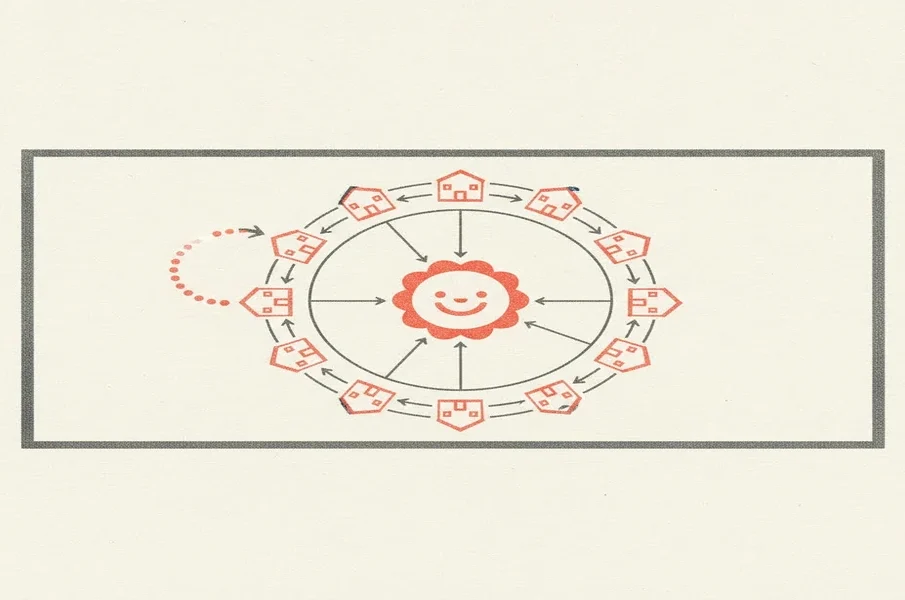
- Multi-location growth breaks the informal, memory-and-messaging way one preschool runs, so the fix is a shared operating layer, not more features.
- One shared record across every branch gives the group a single source of truth and removes the re-keying hand-offs where errors enter.
- Role-based access keeps each branch head inside their own center’s data while the owner or franchisor sees the whole group.
- Consolidated reporting rolls branches up and drills into each, so per-branch signals like DSO expose revenue leakage early.
- A standardized operating model, copied to every location, holds brand quality and turns know-how into a group asset.
- Opening the next center becomes cloning a known configuration instead of rebuilding operations from scratch.
Table of contents
- When one becomes many
- One shared record
- Role-based access
- Group and branch reporting
- A standardized operating model
- Opening the next centre
- What to do next
The Friday afternoon you spend cross-checking three branches’ fee receipts against three separate spreadsheets is exactly the afternoon good preschool management software should already have handed back to you. You know the routine. One branch head has not sent the day’s attendance, so you chase them on WhatsApp. Another spreadsheet says a family paid, but the receipt book at that center says they did not. By the time you piece together which location is actually short on collections, the week is gone and you still are not sure the numbers are right. A Preschool management app can help bring attendance, fee records, and branch-level information together, making it easier to track daily operations without repeatedly checking separate records.
That uncertainty is not a personal failing. It is what happens when the tools that ran one center get stretched across several. Consider that 94% of business spreadsheets contain errors, a figure reported by Phys.org in August 2024. One error-ridden spreadsheet at a single preschool is a manageable nuisance you can spot and fix. One per branch, across a group that keeps adding branches, is a compounding liability. The mistakes do not add up. They multiply.
Here is the position this article argues, plainly. The second center does not need the first center’s tools doubled. It needs a different operating layer. Growth across locations breaks not for lack of features but because each new branch quietly re-runs the informal, memory-and-messaging way the first one ran, and the owner slowly loses sight of the whole. This is the job of multi-location preschool management software: to make one shared record and one set of rules enforceable across every center at once, so the group runs as a single business instead of fragmenting into separate little kingdoms. What follows walks through the six mechanics that make that happen, from one shared record to opening the next center without losing control.
When one preschool becomes many, the way you ran the first one stops working
The habits that run a single center do not survive contact with a second and third location. In-person oversight, a sharp memory, a WhatsApp group, one shared spreadsheet: all of it works when you can walk every floor yourself before lunch. None of it works when the floors are in different neighborhoods.
Watch the specific failure modes appear:
- Student and fee records get kept per branch, so the same child exists as two slightly different entries.
- Each center runs its own spreadsheet and, worse, its own version of the enrollment process.
- The owner can no longer physically see every location, which means they can no longer see every location at all.
- The know-how for running a branch lives only in the head of whoever happens to run it that year.
There is a name for what goes wrong here. When each branch uses its own disconnected tools, those tools become islands of automation, also called information silos, where the same fact (a child, a fee, an enrollment) sits in several places and never agrees with itself. The reconciliation cost is worse than most owners expect, because it does not grow in a straight line. Fully meshed point-to-point connections between systems grow by the count n times (n minus one), divided by two. Ten disconnected apps or branch systems would need 45 links to keep in sync, a tangle the field literally calls spaghetti. Add a branch and you do not add one more thing to reconcile. You add several.
So the real shift is from running several disconnected single centers, which is what most multi-location preschool operations actually are in their first year, toward one centralized preschool management model. That is the move from ad hoc branches to genuine multi-centre preschool management.
Let me be blunt. A spreadsheet per branch is not a system. It is a set of guesses that disagree with each other.
One shared record is the foundation everything else stands on
The first real decision in going multi-location is not which features to buy. It is whether every center sits on one shared record or on one file per branch. Get this wrong and nothing built on top of it can hold.
A single preschool management system gives the group one source of truth spanning every center. Student profiles, admissions, attendance, and fee data live in one place instead of in siloed per-branch tools. A child who transfers from one branch to another is the same record, not a re-typed copy that drops a phone number and a medical note along the way.
Why does one record cut errors? By mechanism, not magic. Every time staff re-key data from one branch’s file into another, a hand-off is created, and every hand-off is a place a mistake can enter. Structured, single-entry capture removes those hand-offs. A 2012 PLoS One study of forms data capture found that for structured check-box fields, automated capture produced far fewer errors than single manual entry, roughly 0.46 versus 3.70 errors per 1,000 fields. The lesson is about method, not about preschools specifically: capture a fact once, in a structured field, and it stays clean.
What does centralized actually buy the owner? Real-time visibility across the whole group without picking up the phone. Who is enrolled where. Who paid. Who attended today. A change made once propagates everywhere, so there is no gap between the owner’s spreadsheet and the branch’s version of the truth.
This is the decision that separates a group that scales from one that fragments. Local autonomy is fine and often good. A local copy of the truth is not autonomy. It is drift. And it is the foundation a scalable preschool management platform is built on, because you cannot roll branches up or drill into them if the data does not first live in one place.
Role-based access lets one record serve a branch head and the owner at once
Putting everyone on one record raises an obvious worry. If it is all in one place, does the front-desk hire at branch three now see the group’s finances? Centralizing the record only works if each person sees the slice that is theirs, and the mechanism that makes that safe is role-based access control.
The idea, as NIST describes it, is simple. Permissions attach to roles, not to named individuals. Each user is assigned one or more roles, and each role carries exactly the privileges its holders need. The model was formalized in 1992 by David Ferraiolo and Rick Kuhn and became the ANSI/INCITS 359 standard, so this is settled ground, not a novelty.
Translate it to a preschool group and it fits neatly. A branch head sees and manages only their own center’s students, staff, and fees. A regional or franchise manager sees a cluster of centers. The owner or franchisor sees the whole group. When you hire a new front-desk person at branch three, you assign the front-desk role and they inherit the right access, at that branch only, on day one. No custom setup, no accidental window into another center’s books.
The operational payoff grows with headcount and locations:
- Clean data boundaries, because one branch cannot see another branch’s finances.
- Safe delegation, because the owner can hand a branch head real control without handing over the whole group.
- Fast onboarding and offboarding, because you revoke a role, not a scattered list of one-off permissions someone forgot to write down.
This is what turns a preschool business management software backbone from a shared spreadsheet anyone can wreck into a controlled system where each person’s reach matches their responsibility.
A proven operating model should be copied to every branch, not reinvented at each one
Consistency across locations is not achieved by asking each branch to try harder. It is achieved by making one standardized operating model the default everywhere, so trying hard is not the variable that decides whether branch four runs like branch one.
This is the work of multi-centre preschool management and, for a chain that licenses its brand, preschool franchise management software. A proven operating model gets defined once and replicated to every branch, including brand-new ones:
- Enrollment and admissions forms.
- Fee structures.
- Class-allocation and promotion workflows.
- The shape of the daily routine.
Standardization removes rework and variance. The parent experience, the brand, and the paperwork look the same at branch one and branch five.
For a franchisor the value is sharper still. This is how you hold a brand standard across franchisees you do not personally supervise. The franchisee gets a working configuration, not a blank system and a training manual to interpret however they like. And when a franchisee drifts from the standard, that deviation shows up in the consolidated reporting from the section above, instead of surfacing as a complaint months later.
What to actually do next
If you are running or about to open a second or third center, the question is not which features to shortlist. It is whether every branch shares one record, one set of roles, one reporting view, and one operating model. If it does, growth stays inside your control. If it does not, each new branch quietly subtracts a little more visibility until you are running the whole group blind and calling it delegation.
Local autonomy without a shared record is not autonomy. It is blindness with extra steps. Centralized preschool management does not take judgment away from your branch heads. It gives you the visibility that makes trusting them with that judgment safe.
If you want to see how this works across your own branches, the BubbleBud Kids team is happy to walk through it with you. Reach us at connect@bubblebudkids.com and we can talk through what running your group as one business would look like.
FAQs
What is the difference between preschool management software for one center and for multiple locations?
For a single center the software mainly organizes one site’s records. For multiple locations it has to make one shared record and one set of rules enforceable across every branch at once, so student, fee, and attendance data live in one place rather than in a separate file per center. The multi-location job is coordination across branches, not just tidier records at one.
How does role-based access keep each branch’s data separate while the owner sees everything?
Permissions attach to roles instead of to named people. A branch head role can reach only that center’s students, staff, and fees, while an owner or franchisor role spans the whole group. Because everyone sits on the same shared record but sees only the slice their role allows, branches stay walled off from each other and the owner still gets a full view.
Can consolidated reporting show me a problem at one branch without hiding it in group totals?
Yes. Consolidated reporting rolls every center up into group-level numbers and lets you drill into any single branch. Watching a per-branch signal like days sales outstanding or fee-collection rate surfaces a slipping center this month, rather than letting a healthy group total mask one branch that is quietly bleeding cash.
How does the software help me open a new center faster?
When one shared record, role-based access, consolidated reporting, and standardized workflows already exist, a new center inherits the group’s data model, permission roles, reports, and SOPs on day one. Launch becomes cloning a known configuration, then adjusting only what is genuinely local, like the address and staff roster, instead of standing up operations from scratch.
Does centralizing records mean my branch heads lose local control?
No. Centralizing the record is what makes safe delegation possible. Role-based access gives a branch head real control over their own center, while consolidated reporting keeps the group visible to you behind them. The point is not to remove judgment from branch heads but to give you the visibility that makes trusting them with it safe.